Thursday, July 22, 2010

Chilkoot Trail Again


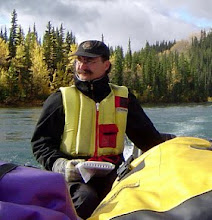
After last August's rather damp hike over the Chilkoot, Andrew and I organized a second venture for late June. Five woman friends, all novices at backpack camping, joined us for the adventure. We discussed equipment for a couple of weeks in the spring and everyone bought, borrowed and dried the necessary tents, anoraks and food for the trip. Practice hikes with packs and a pre-trip packing session finished off our preparations and everyone had a pack weighing less than 17 kilos, not too bad.


Over the past twenty-five years I've worked and hiked on the trail there has been a considerable improvement along many sections of the route. Trail crews have added firm stone steps and chipped out foot holds on most rock slopes and creek fords. In the rock slides and up the "Golden Stairs" to the summit though, it is the same gruelling boulder scramble it has always been.


Our group took on all these challenges in good humour and, in three days of fine weather, we humped our way through the coastal rainforest and over the summit to Happy Camp. As we bedded down though, the wind began to blow and rain pelted down through the night and into the next day.


We were drenched by the time we made Lindeman City and gratefully hung up our wet kit from the rafters of the warm cabin. The rain faded in mid-afternoon and we made it to Bare Loon Lake to shorten our next morning hike to catch the train at Bennett.
On the train there was rest and the beauty of Lake Bennett until we returned to a triumphant welcome at the Carcross railway station.


World Cup Sunday in Vancouver

Straight from the airport with our friends to see the show of French Impressionist sketches illustrating the liberation of French women during the late nineteenth century. There was an earnest attempt to show that women could painted as realistic, instead of metaphorical, nudes and that "sacred nudity" was one that took you beyond the mere physical. Somehow I had trouble separating this from the metaphor but I'm not an art historian. The exhibit did note however that French women didn't get the vote until 1944 when American tanks liberated French women from both Nazi occupation and conservative French men.

We drifted out of the gallery and after a moment's discussion agreed on falafels from the Babylon Palace on Robson for lunch. While ordering we noted cheering crowds just around the corner on the Granville mall. The extra time of the World Cup Final played out on a big screen up the street. Crowded with polite Vancouverites we saw young women with red yellow red bands painted on their face and Espagna t-shirts mixing aimably with fans of the House of Orange.

Vancouver is raucous in support of the public viewing of sports - likely a legacy of their recent hosting of the Winter Olympics - but they are also clearly neophytes in the devoted following of sport. One local fellow informed me that the "Orange guys are the Spanish." When I corrected him, he paused, checked my suggestion with the fellow beside him and said "I've been cheering the wrong team!" I assured him he still had time to reverse the karma in extra time cheers. He shrugged, "I am fan of Germany anyway," noting the Germans had beaten Uruguay, but he couldn't actually remember the score or whether they played extra time or not. I love that kind of sport fan - its all about now!

And then Spain scored. The square erupted in cheers, red and yellow flags shot into the air and waved frantically. Ole! Ole! Ole!

Thursday, June 17, 2010

The Dawson Waterfront


Dawson waterfront in 1898.

The Dawson waterfront was for many years its connection to the outside world. Fifty-five years ago the highway made it to town but the river has lost little of its importance for the people of Dawson. Although there has been talk of building a bridge over the river and thus defacing the river landscape, cars, trucks and 2 and 4 wheelers cross all summer on the ferry. In winter there is an ice bridge with the attending excitement of being the both the first and last across it. Alison's Dad took her on the last trip over one spring, "the water was right over the tires."

Waiting for the ferry (above) and waiting for the traffic (below).


The waterfront collects people, people waiting for the ferry, people waiting for salmon, people watching the river, people guarding the river and people travelling up and downstream to their gardens, fish camps or to Moosehide or further afield to Eagle or Circle in Alaska or even floating all the way to mouth of the river on the Bering sea.

Alison's big sister brings people onto the ferry.

Johny, the mining inspector on the job and looking fiercely at a photographer.

The river front is a busy place. The Yukon Rose sits high on the bank. Brian has been working on restoring the vessel for years. The hull has dried out and he spends his days lying beneath the boat filling the cracks between the hull planks. He wants it in the water in the next couple of weeks so the wood will swell with absorbed water and become watertight.


And there are still some big ships here. The Yukon Queen II carries passengers between Dawson and Eagle every day, one of the most extraordinarily beautiful stretches of a beautiful river. The Klondike Spirit, a vessel built in Eagle, offers day trips on the Yukon for those wanting a round trip back to the City of Gold.

Sunday, June 6, 2010

Making Connections on the River


Every spring one of our first river trips is with our Godchildren. This year we motored up river through the turbulence of Miles Canyon to find a sunny sandbar for a picnic. Andrew took the helm while Hen kept a close eye on the river. Hen was going to drive us home in the afternoon.


The rest of gang, bundled up for the wind, settled in for the ride. Seamus read his book in the shelter of the bow while Bronwyn and Julian took turns keeping company with Petrie, the warm dog.


We're a bit late this year. The river has started to rise so the sandbar isn't nearly as large as I remember it from previous visits. But it is still big enough for us to trace out a big ring for playing Fox and Goose. This year we even have a small island in the course.


There's plenty of action. I sit on the sandbank and take photos. Last time I played my knee was wrecked for months. We are planning a Chilkoot Trail hike later this month so I have to be careful, or lazy in the warm sun, you decide.


The obligatory photo of the boat. It gets us into a lot of great places. As we are winding down our games some of the neighbours come over to join us for a cookie and to trade some river stories. They are traveling in a lovely cedar strip canoe made by their grandpa back in the 1970s. There are lots of connections out here.

Monday, May 31, 2010

Mittenwald - Southern German Alps


The Bavarian Alps are only a two hour train south of Munich. During the trip we leave the flat lands of the Isar River with their tractors and ploughed fields. Train stations lose their neat and tidy look and in several towns the yards are filled with large logs waiting for transport to sawmills. As we close on the mountains steep pastures and colourful villages like Mittenwald - at first I thought this might mean "in the middle of the bush" but later on a map I noticed both an east forest and west forest so Mittenwald actually is just the forest in the middle.


Mittenwald is a conservative rural community, vividly Catholic in their house paintings and staunchly holding to their values. When I entered stores or restaurants the greeting was always "Grusze Gott", or God's greetings to you. Georg, at the Deutsches Museum, commented that the religious influence of the German Reformation got no further west or south than the Rhine and Danube rivers. Not a hydrological barrier, rather the old boundary of the Roman Empire. South of the line cities remained powerful and conservative social forces maintained the old order through the Middle Ages and into the present. Beyond, in the wilds of the north, who knows what might happen!


Spring was well in place during my visit. The forests were emerald and as I hiked up the mountain I heard the most marvelous tinkling sound, rather like a waterfall. However as I closed on it the noise became a most ribald cacophony, a herd of goats, each belled, munching their way along the hill slope. It was lovely to hear.


Towering above the town are the Alps, just beyond is Austria.


On my way back to Munich I stopped to visit a friend who took me to his lake side local, where beer and freshly caught and barbequed mackerel were on the table for my last supper on this trip. We dined across the water from one of the small, but no less eccentric, palaces of "Mad" King Ludwig.


Monday, May 24, 2010

Every Engineers Favorite Museum


Marionplatz is the main square of Munchen. The Rat Haus (City Hall) was restored after its destruction in the war right up to the installation of the famous glockenspiel clock and animated figures. Every day at 11:00 they perform, big crowds of tourists gather to watch the spectacle.


Nearby is the Deutsche Museum, an extraordinary record of scientific and technological history. Established in the mid-1920s on an island in the Isar River previously hosting a large chemical plant, the museum exhibits a lot of cool stuff. The first German submarine, U1 (1906), is here with large parts of the hull cut away to allow us to see inside. The mining history exibit covers a third of a hectare on multiple layers in the building. Visitors wander through medieval tunnels watching silver miners, watch an operating steam waterpump and walk alongside aggressivce coal mining machines from the 1960s.


I have the priviledge of being guided by Georg Jochim one of the museum researchers. Georg is working on the effect of the "invention of America" on European thought. Once people got over the idea of the New World as Asia they had to try and figure out what it was. This has all kinds of interesting philosophical and material implications, not least upon the inhabitants of the new place.


The museum has a Greenland kayak and notes the influence of the Canadian canoe, displaying a German version for family camping.


Everybody likes to photographed with the Starfighter.


From the top of the Museum's tower we have a splendid view of the Isar River flowing through a green Munchen. After the war the City decided to rebuild their town in its previous low rise tradition. So while in the distance the huge scale of the Olympic stadium, sheltered by artifical hills made from the rubble of the bombed out buildings previously on the site, the large core of the city retains the prominent skyline of church steeples and medieval city buildings.

Die Zauberflote - A Night at the Opera


On Friday evening I attend a performance of the Magic Flute at the Staatstheater am Gartnerplatz. Built in 1865 this theatre was established as an Actien-Volksttheater, that is, it was publically funded and not subject to royal control. The theatre continues to offer a wide array from the performing arts today. After picking up my tickets I headed to the Deutsche Eiche (German Oak) for dinner. The Eiche has long been a centre of the colourful arts counter-culture of Munchen. Today it boasts the largest male sauna in the city, is a meeting point for the city's Gay society and has an excellent and well presented dinner menu. After dinner I joined the growing circle of opera attendees gathering in the small park before the theatre. I watched a half dozen young women in high heels and formal black gowns opening a bottle and giggle as they passed around small cups launching their evening with some bubbly.


Veal medallions with butter spatzel and salad


Apfel strudel with strawberries, vanilla custard and chocolate almond ice cream

The Gartner Platz theater is small, about the size of the Palace Grand in Dawson City, perhaps a trifle more ornate. There was an intimacy of players, orchestra and audience that such a space provides and the "Masonic" intricacies of Mozart's fantastic tale unwound before us.


I watched a similar scene on the edge of the Englische Garten on my way home.